Dreaming of an elopement at Mount Rainier? You’re in the right place.
Mount Rainier National Park is one of the most incredible places in Washington to get married. You can exchange vows beneath the mountain, walk through wildflower-filled meadows, explore alpine trails, or keep things simple with an easily accessible ceremony location.
But planning a Mount Rainier elopement takes more than choosing a pretty spot and showing up.
You’ll need to think about when to go, where to have your ceremony, whether you need a permit, road access, group size, weather, and how to build a timeline that actually works with the park.
We’ve spent years exploring Mount Rainier and photographing elopements throughout the park. This guide walks you through how to elope in Mount Rainier National Park, from choosing your date to planning your ceremony and preparing for changing mountain conditions.
Table of Contents
How to Elope at Mount Rainier: Step by Step
Planning an elopement at Mount Rainier can feel overwhelming at first, but the process becomes much easier when you break it down.
Step 1: Choose the Best Time to Elope at Mount Rainier
Step 2: Choose Your Mount Rainier Elopement Location
Step 3: Choose the Best Day of the Week
Step 4: Apply for a Mount Rainier Wedding Permit
Step 5: Build Your Mount Rainier Elopement Timeline
Step 6: Get Your Washington Marriage License
Step 7: Have a Weather Backup Plan
Step 8: Final Details for Your Mount Rainier Elopement
Step 9: Leave No Trace
We’ll walk through each step below.

Step 1: Choose the Best Time to Elope at Mount Rainier
When you should elope at Mount Rainier depends on more than the weather. The season you choose can determine which areas of the park are accessible, whether you’ll see wildflowers or fall colors, how much snow you’ll encounter, and which locations make the most sense for your wedding day.
Mount Rainier looks completely different throughout the year. A location that is perfect in July might be buried under snow in May, while a lower-elevation forest location can still be accessible when the higher elevations are closed.
That’s why we recommend choosing your season, location, and date together rather than picking a location first and hoping it works for your wedding date.
Summer at Mount Rainier: Best for High-Elevation Locations and Wildflowers
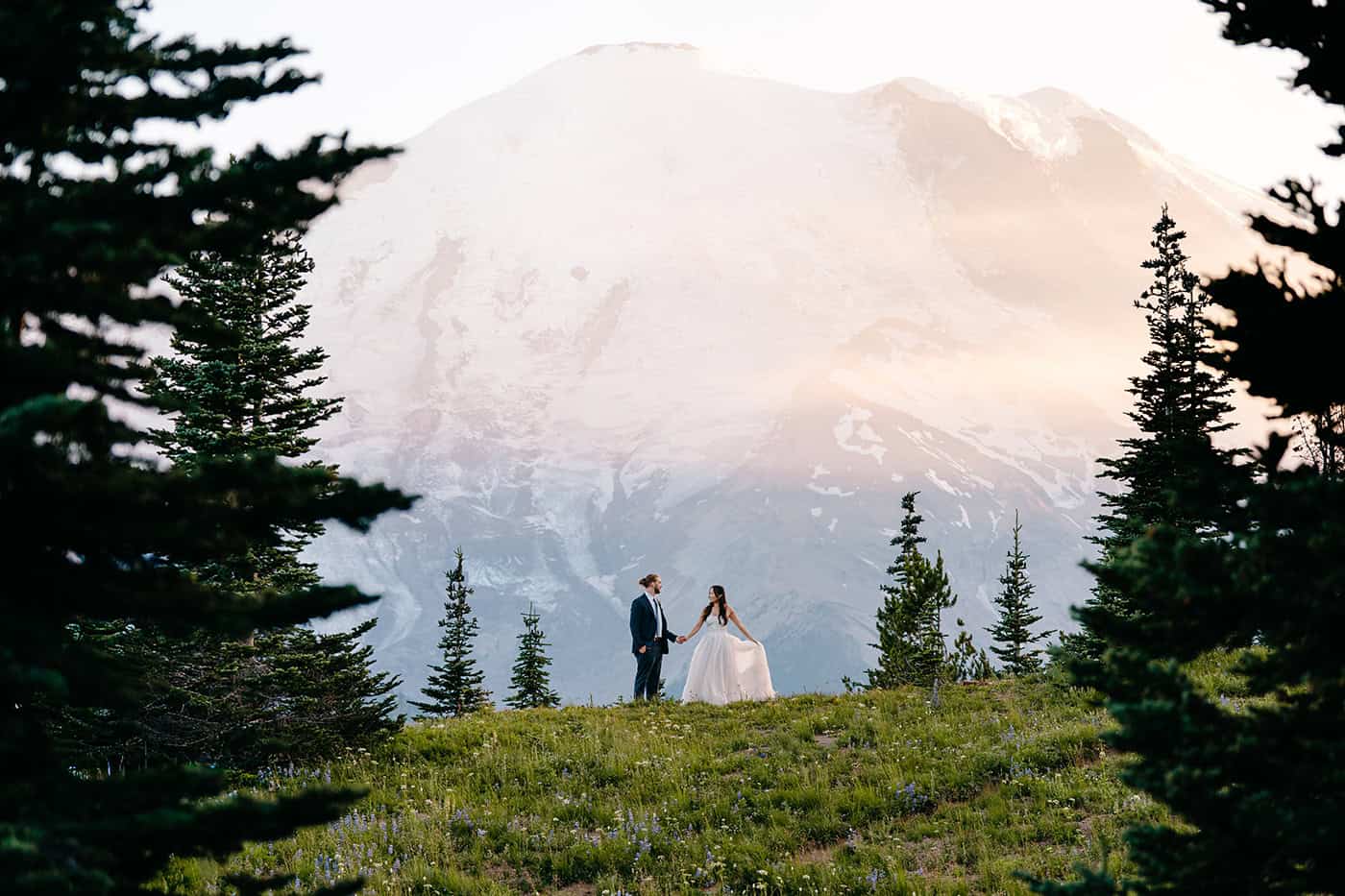
Summer is the most popular time to elope at Mount Rainier, especially from July through September. This is when many of the park’s high-elevation roads and trails are accessible, wildflowers are blooming, and you have the greatest number of locations to choose from.
The Sunrise and Paradise areas are especially popular during summer because you can access some of Mount Rainier’s most dramatic mountain views without needing a multi-hour hike.
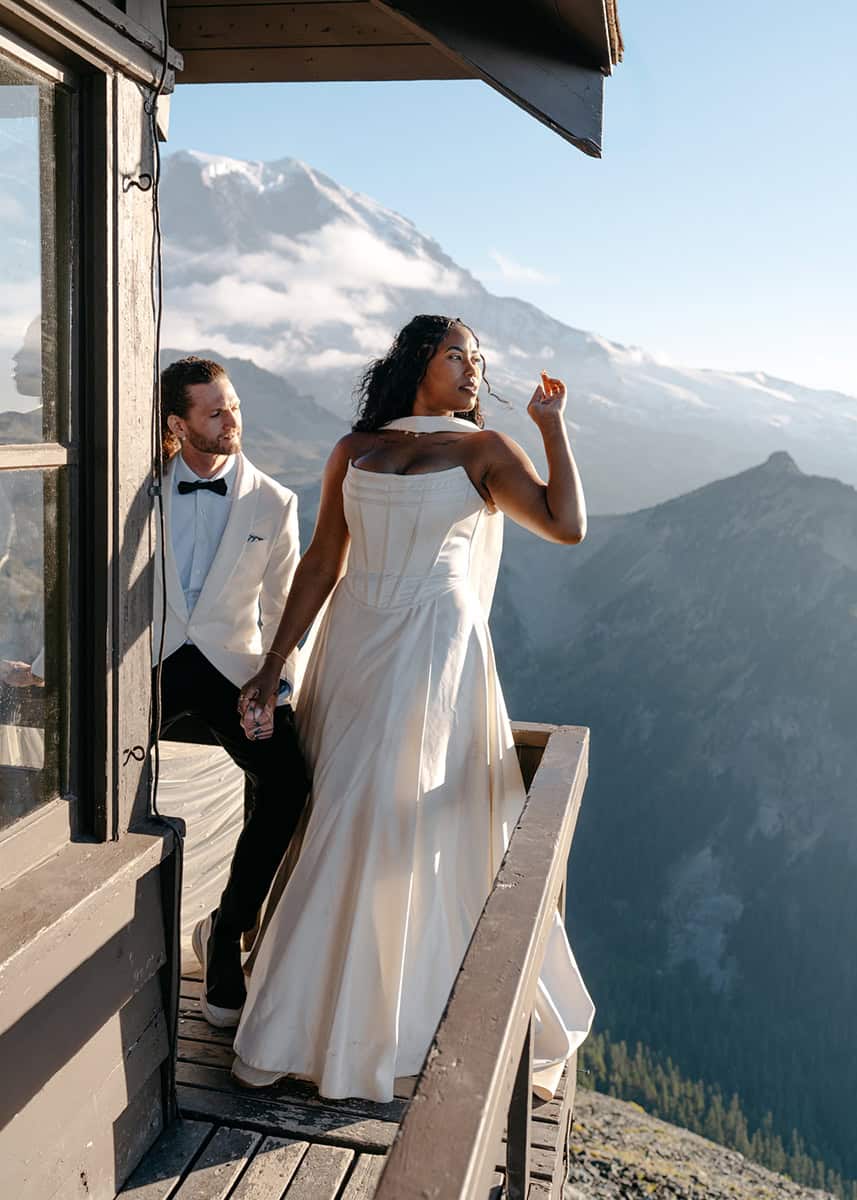
If you want a more adventurous elopement, summer also opens up higher-elevation locations such as Fremont Lookout, Burroughs Mountain, Skyline Loop Trail. These locations can involve more hiking, but the scenery becomes part of the experience.
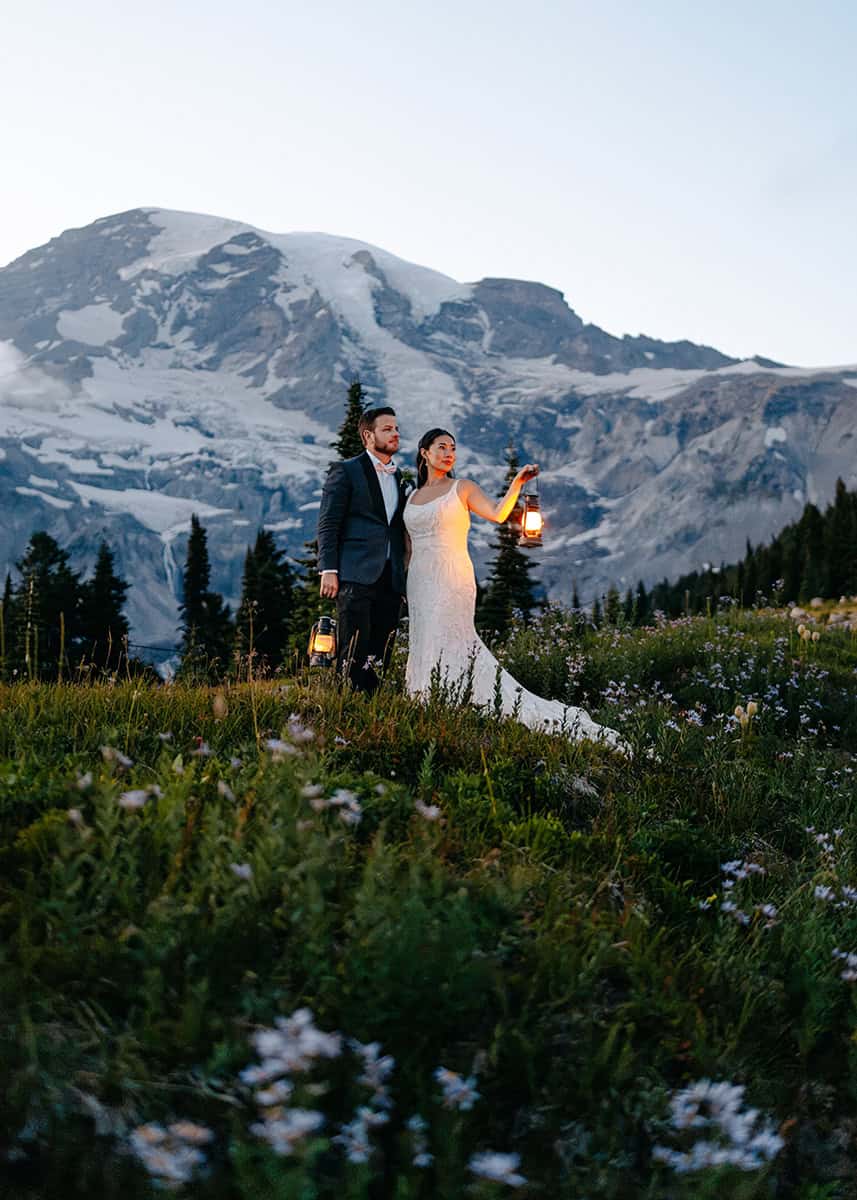
For wildflowers, locations around Paradise, Sunrise, and Tipsoo Lake can be beautiful when they are in bloom. However, wildflower timing varies from year to year depending on snowmelt and weather.
Summer also brings the most visitors. If you want a quieter experience, we recommend choosing a Tuesday, Wednesday, or Thursday and considering sunrise or later in the evening.
Fall at Mount Rainier: Short Peak Color Season
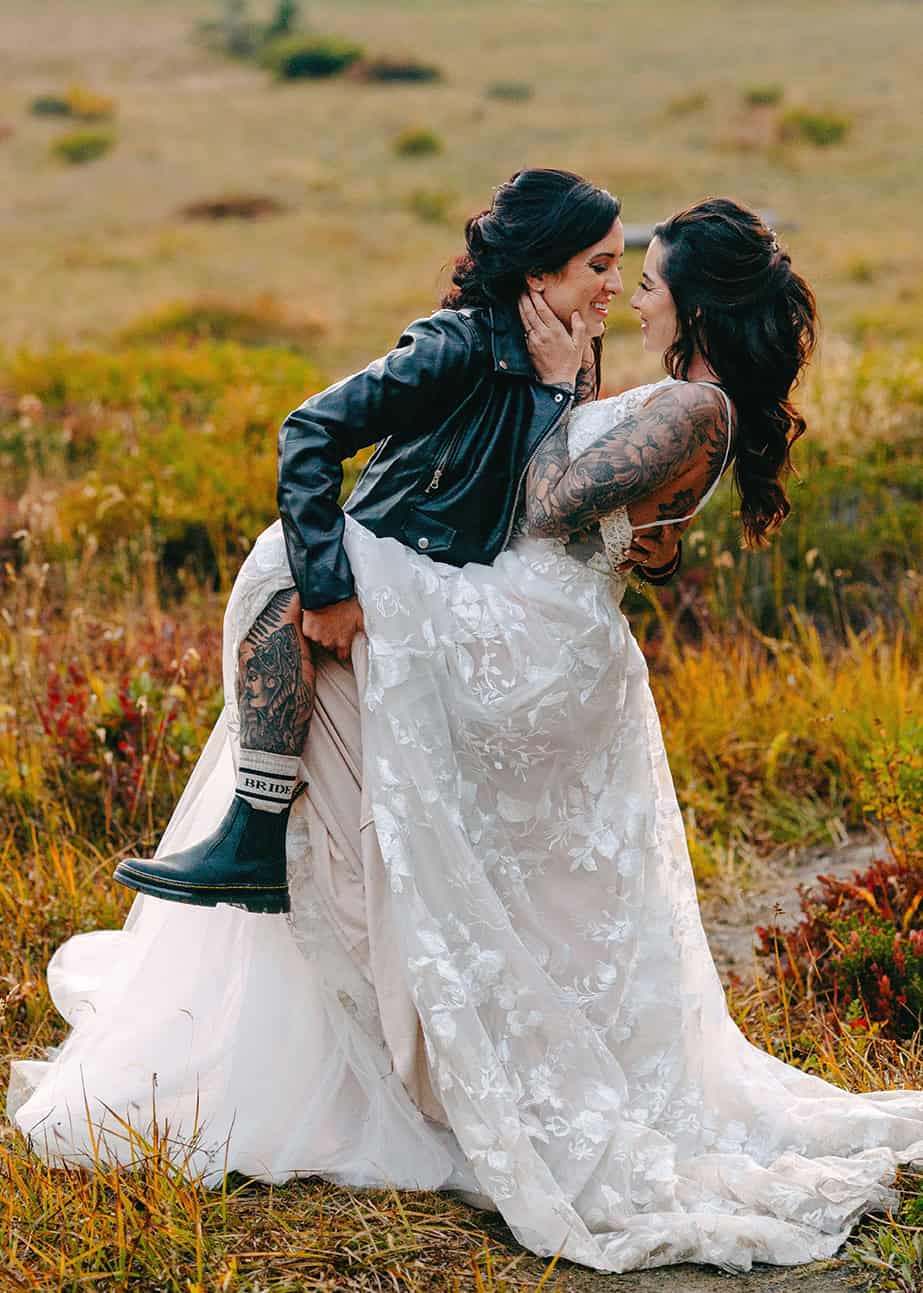
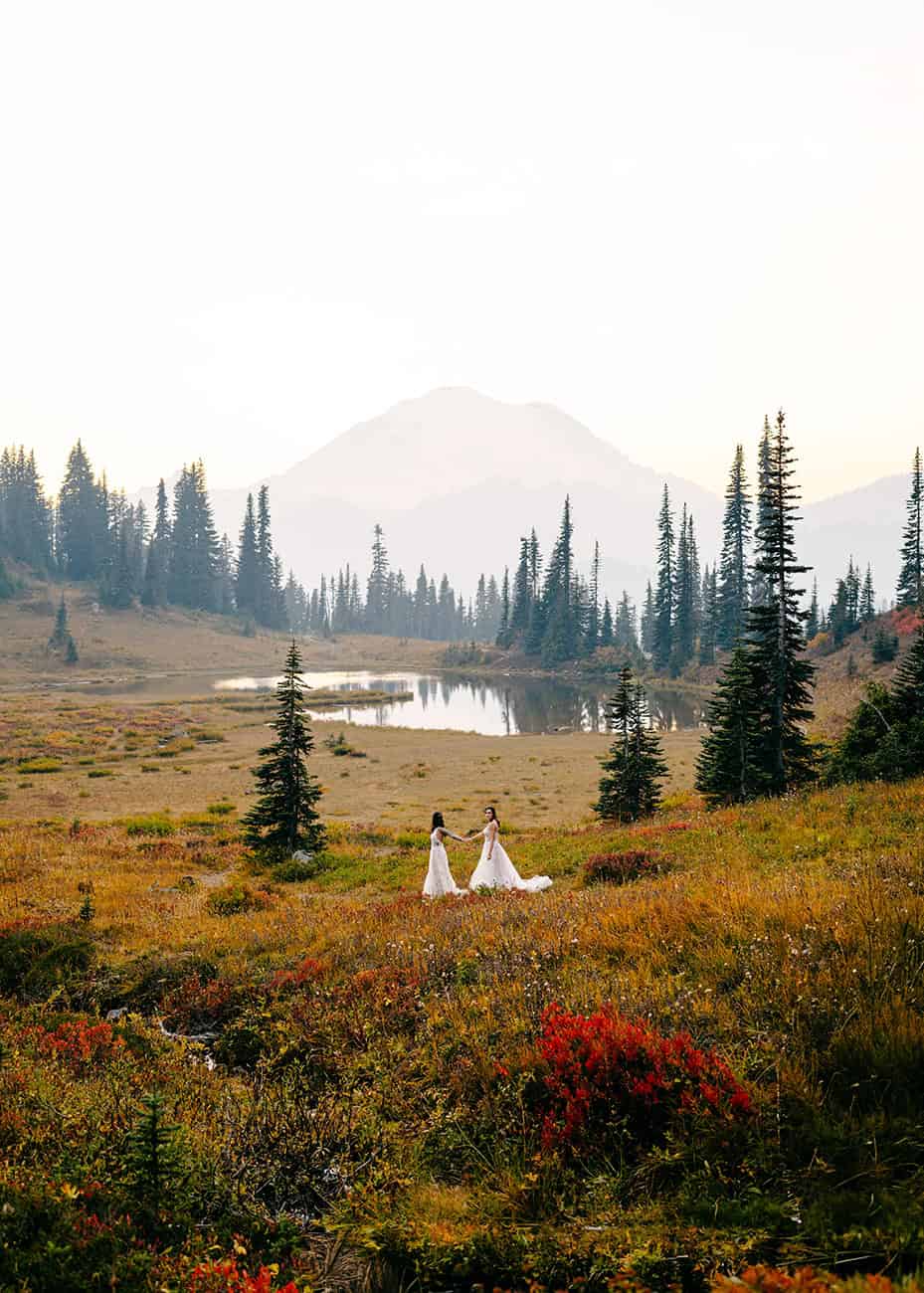
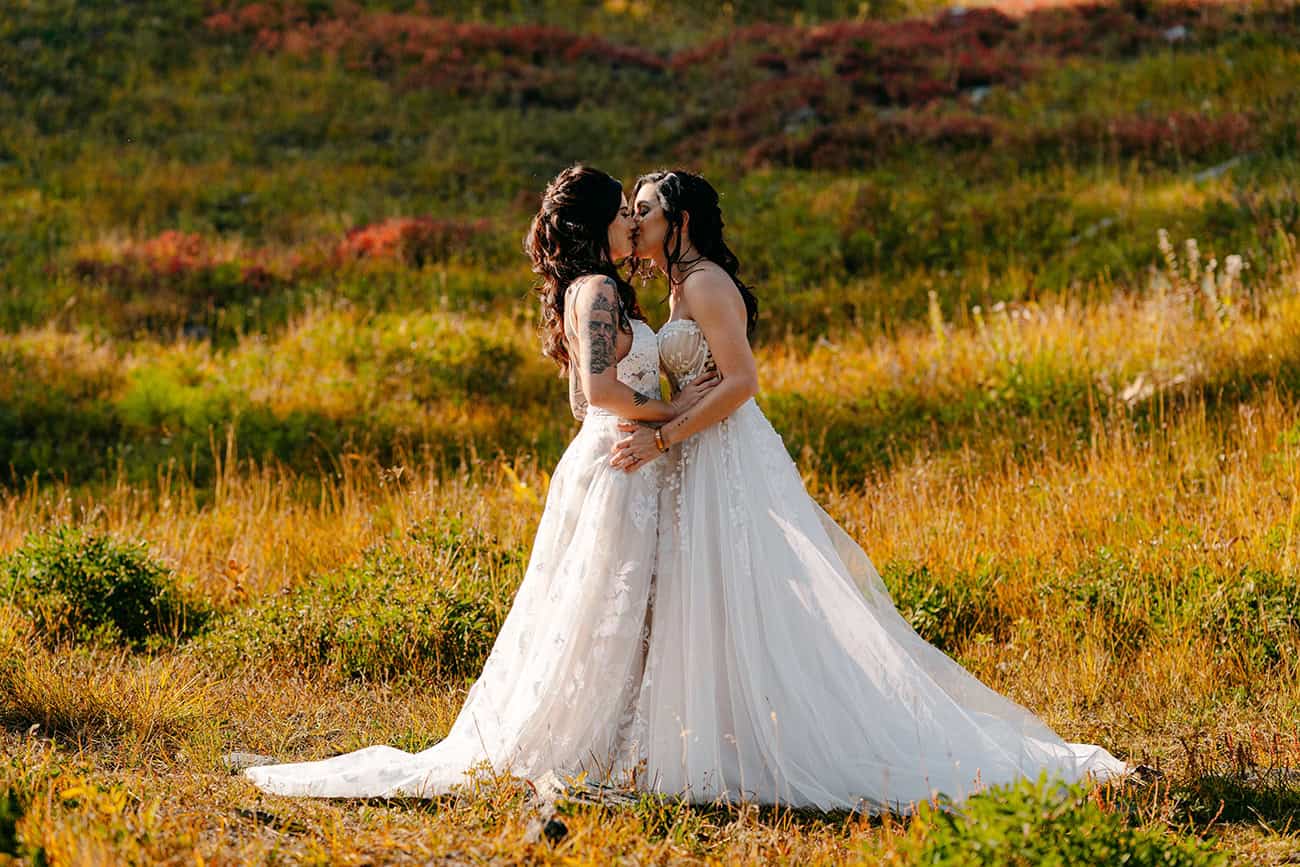
Fall is one of our favorite times to photograph Mount Rainier. The alpine meadows around Paradise, Sunrise, and Tipsoo Lake turn beautiful shades of gold, orange, and red as the summer greenery fades.
Peak fall color is usually short, lasting roughly from mid-September through the first week of October. After that, snow can start returning to the higher elevations, making some roads, trails, and viewpoints harder to access.
If fall color is important to you, we recommend planning for mid-September through early October and staying flexible with your exact location as conditions can change quickly.
Winter at Mount Rainier: A Snowy Elopement Experience
Winter completely changes what is possible at Mount Rainier.
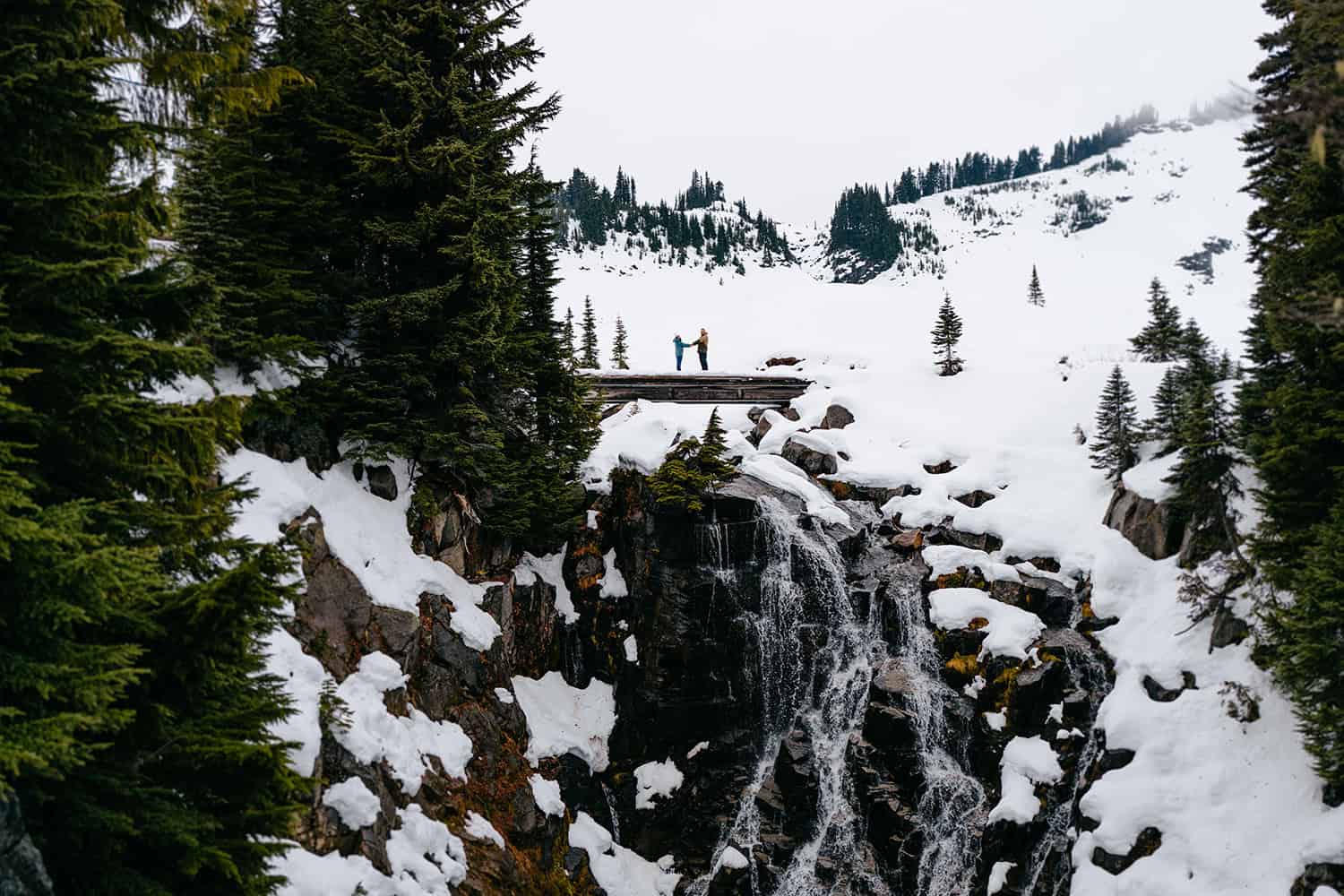
Much of the park is covered in snow, and many roads, trails, and high-elevation locations are inaccessible. Because of this, you’ll have far fewer locations to choose from than you would during summer.
Paradise is one of the main areas people associate with winter at Mount Rainier because of its deep snow and dramatic winter scenery. However, getting there and moving around the park in winter requires much more planning and flexibility.
Winter can be an incredible choice if you specifically want a snow-covered Mount Rainier elopement, but it is not the season we would recommend if you have your heart set on hiking to locations such as Fremont Lookout, Burroughs Mountain, or Tipsoo Lake.
Instead, think about what kind of experience you want. If the goal is snow, you can build your day around accessible winter areas rather than trying to recreate a summer itinerary in completely different conditions.
Spring at Mount Rainier:
Spring can be one of the trickiest seasons to plan at Mount Rainier.
While lower elevations may begin to feel like spring, many of the park’s higher-elevation areas can still be covered in deep snow. Roads and trails may remain closed, and the locations you might normally associate with a summer elopement may not be accessible yet.
This means spring is not necessarily the best time to visit if you have a specific high-elevation location in mind.
Instead, lower-elevation areas such as Longmire and Ohanapecosh may offer more possibilities, depending on current conditions and access.
If you are planning a spring elopement, we strongly recommend staying flexible with your location and checking current road and trail conditions as your date approaches.
Match Your Mount Rainier Location to the Season
Instead of asking, “What is the best month to elope at Mount Rainier?” we recommend asking, “What locations will actually be accessible during the month I want to get married?”
As a general starting point:
- Summer: Best for Sunrise, Paradise, wildflowers, alpine locations, and longer hikes
- Early fall: Great for high-elevation locations while access is still available, plus cooler temperatures
- Late fall: Lower-elevation forests such as Longmire and Ohanapecosh can become more practical as snow returns to higher elevations
- Winter: Best for a snow-focused experience in areas with winter access
- Spring: Better for flexible couples who are open to lower-elevation locations and changing conditions
These are general guidelines, not guarantees. Snowpack, weather, road conditions, construction, and other park conditions can change from year to year.
That is why we recommend choosing your location, date, and season together. If you have your heart set on a specific location, start by checking when that area is normally accessible. If your date is already fixed, be open to choosing a different part of the park that works better for that time of year.
For a detailed breakdown of individual ceremony locations, hiking, group sizes, scenery, and accessibility, see our Best Mount Rainier Elopement Locations guide.
Step 2: Choose Your Mount Rainier Elopement Location
Once you’ve chosen your general season, it’s time to think about where you actually want to get married.
Mount Rainier has everything from alpine viewpoints and wildflower meadows to lakes, waterfalls, forests, and easy-access ceremony locations. However, not every beautiful location is available for wedding ceremonies, and the right location depends on your group size, hiking ability, season, accessibility needs, and the experience you want.
Rather than trying to list every ceremony location here, we’ve created a separate guide dedicated entirely to choosing the right spot.
Explore the Best Mount Rainier Elopement Locations
Our Best Mount Rainier Elopement Locations guide covers:
- Specific ceremony locations throughout the park
- Mountain views, lakes, waterfalls, forests, and wildflowers
- Easy-access locations
- More adventurous hiking locations
- Locations by group size
- Accessibility considerations
- Crowds and privacy
- Best days and times to visit
- Seasonal considerations
Explore the Best Mount Rainier Elopement Locations
This is also where we recommend thinking about your location, day, and ceremony time together rather than choosing a date first and trying to make your favorite location work afterward.

Step 3: Choose the Best Day of the Week
If you have flexibility, we love Tuesday, Wednesday, and Thursday for Mount Rainier elopements.
Mid-week dates can mean fewer visitors and, depending on the location, more flexibility when choosing your ceremony spot.
This can be especially helpful during summer when popular areas of the park become busy.
That doesn’t mean you can’t elope on a Friday, Saturday, Sunday, or holiday. You absolutely can. However, you should expect more visitors and potentially fewer location options.
Step 4: Apply for a Mount Rainier Wedding Permit
If you’re planning a wedding ceremony inside Mount Rainier National Park, you’ll need to apply for a National Park Service wedding permit.
The permit process is one of the most important parts of planning your Mount Rainier elopement, so don’t leave it until the last minute.
How Much Does a Mount Rainier Wedding Permit Cost?
There are currently two fees associated with a Mount Rainier wedding permit.
When you apply, you’ll pay a $50 non-refundable application fee through Pay.gov. If your permit is approved, the National Park Service currently charges a $275 management fee, which must be paid before the permit is finalized.
That means the current permit-related fees are $325 total.
Because NPS fees can change, we always recommend checking the current Mount Rainier National Park permit information before submitting your application.
How Long Is a Mount Rainier Wedding Permit?
The National Park Service currently issues wedding permits for a three-hour timeframe at your permitted ceremony location. This covers the time needed for your ceremony and photography or videography associated with the permitted activity at that location.
Importantly, the three-hour permit does not limit how long you can spend exploring or taking photos elsewhere in Mount Rainier National Park. You can still travel throughout the park and take photos at other areas that are open and accessible without needing a wedding permit for those locations.
Think of the permit as permission to hold your ceremony at a specific location, rather than a three-hour limit on your entire wedding day.
Understanding Mount Rainier Wedding Group Sizes
Your group size can have a big impact on which ceremony locations are available to you.
The National Park Service counts everyone participating in the wedding toward your total group size, including the couple, guests, children, photographer, officiant, witnesses, and other participants.
Because group-size restrictions vary by location, it’s important to know your total group size before choosing your ceremony location.
Eloping with just a few people
Smaller groups generally have the most flexibility.
Many smaller trail locations can accommodate groups of up to eight people, allowing you to choose from a wider range of adventurous locations.
If you’re bringing a few more people but need an easier-to-access location, places such as Emmons Vista Overlook, Sunrise Nature Trail, and Nisqually Vista can be great options, depending on current NPS restrictions.
Eloping with a larger group
As your group gets larger, your location options become more limited.
For larger groups, you’ll generally need to focus on designated ceremony locations that are approved for that group size. Accessible locations such as Nisqually Vista, Sunrise Nature Trail, and Sunrise Picnic Area can be worth considering if you want beautiful scenery without requiring everyone to complete a strenuous hike.
If you’re planning a larger wedding rather than a true elopement, you may also want to look at Mount Rainier wedding venues outside the national park.
Always check the current NPS group-size requirements and approved ceremony locations before choosing your location, since restrictions can change.
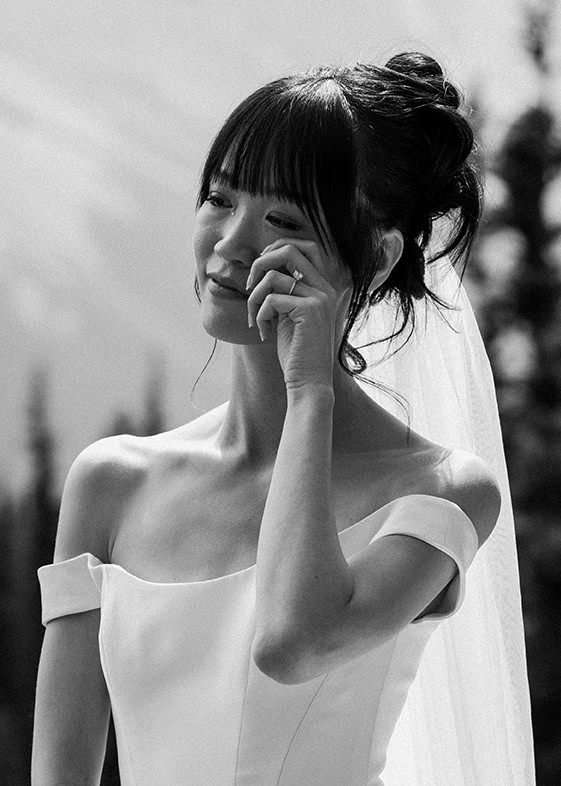
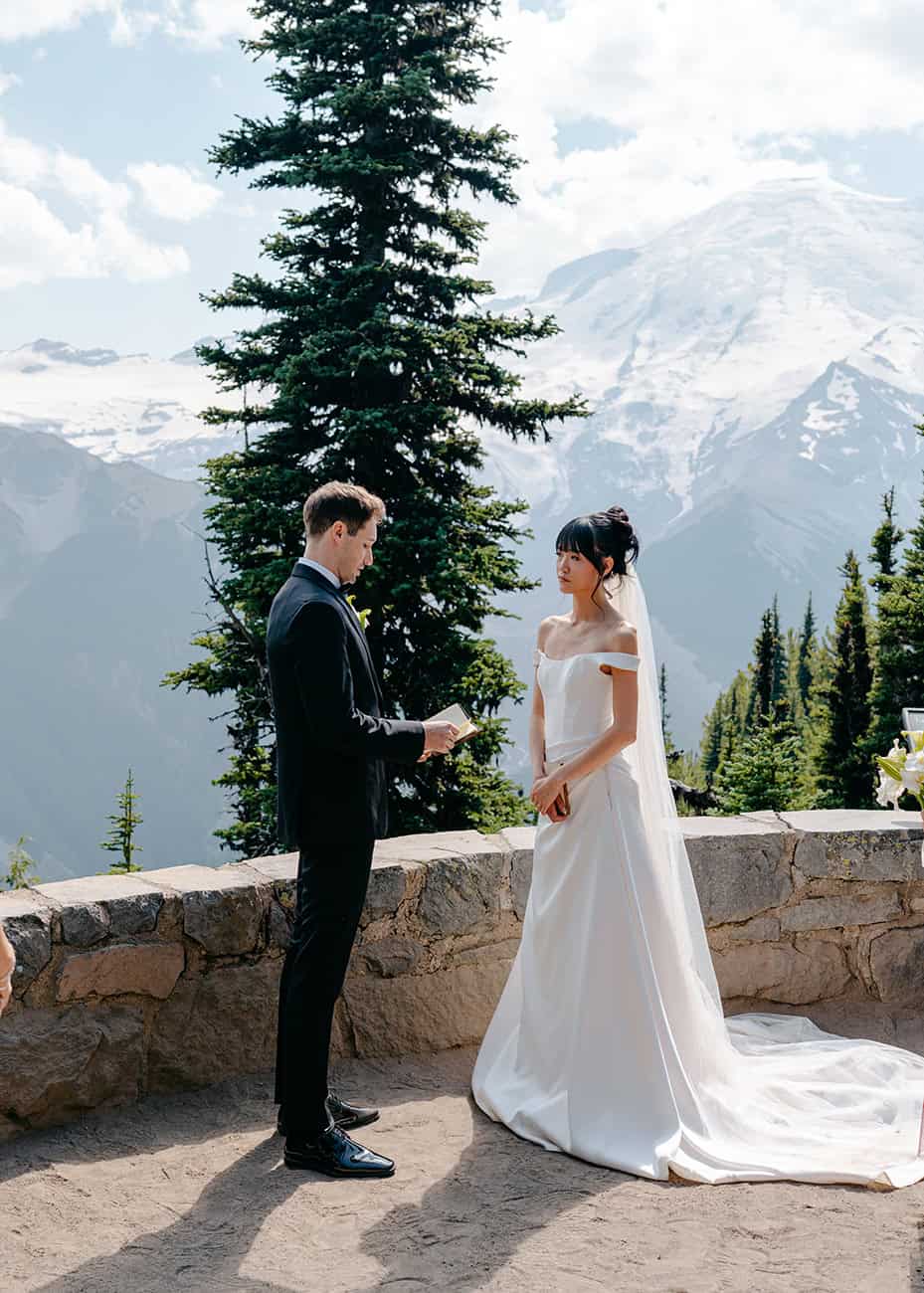
Step 5: Build Your Mount Rainier Elopement Timeline
Once you know your location, season, permit restrictions, and group size, you can start building your timeline.
This is where I recommend thinking beyond simply:
“Ceremony at 2 p.m., photos, done.”
A Mount Rainier elopement can be so much more than that.
You might start with getting ready at your cabin, drive into the park, stop at viewpoints along the way, hike together, exchange vows, explore the area, have a picnic, read letters from family, or watch the sunset.
Things to consider when building your timeline
When planning your elopement day, it’s important to factor in logistics to ensure everything flows smoothly. Here are key things to consider:
Driving distances between areas
Mt. Rainier is vast, and travel times between different regions of the park (Paradise, Sunrise, Ohanapecosh, and Carbon River) can take an hour or more.
Hiking time
If your elopement includes a hike, consider the time needed to reach your location, take breaks, and enjoy the experience. Always allow extra time for unexpected delays and capturing those perfect moments.
How long should a Mount Rainier elopement be?
There isn’t one perfect amount of coverage.
Some couples want a short ceremony and a few hours of photography. Others want an entire day of hiking, exploring, and documenting the experience.
Think about what you actually want your wedding day to feel like.
If hiking and exploring are important to you, give yourself enough time to enjoy the experience instead of rushing from one location to another.
Step 5: Have a Weather Backup Plan
If you’re planning a Mount Rainier elopement, you need to be comfortable with changing weather.
The mountain can be sunny in one area and completely covered in clouds a short distance away. Conditions can also change quickly throughout the day.
That’s why we always recommend having a backup plan.
Your backup doesn’t necessarily have to mean abandoning your wedding day.
Instead, it might mean:
- Choosing a lower-elevation location
- Adjusting your ceremony time
- Changing your hiking plans
- Embracing clouds, mist, or rain
- Having an alternate location in mind
Some of our favorite Mount Rainier photographs have happened on days when the forecast didn’t look “perfect.” The good news is that we know the park like the back of our hand, so we can help you navigate changing weather and give you plenty of backup options if conditions shift.
Step 6: Get Your Washington Marriage License
Your National Park Service wedding permit and Washington marriage license are two different things.
The park permit gives you permission to hold your wedding ceremony at an approved location inside Mount Rainier National Park. Your marriage license is what makes your marriage legally recognized by the State of Washington.
You’ll Need an Officiant and Two Witnesses
Washington requires your marriage ceremony to take place in the presence of an authorized officiant and at least two witnesses.
You have a few options for your officiant. You can hire a professional wedding officiant, ask a friend or family member to become ordained and officiate your ceremony, or have one of our photographers officiate your wedding.
All of our photographers are ordained and can legally officiate and sign your marriage paperwork, which can make things especially easy if you’re planning a small elopement.
If it’s just the two of you, you’ll still need two witnesses for the legal ceremony. Depending on your plans, those can be friends or family members, or we can help you figure out an option that works for your elopement.
Because marriage-license requirements and procedures can change, always check the current requirements with the Washington county that issues your license before your wedding day.
Step 7: Final Details for Your Mount Rainier Elopement
Once you’ve chosen your date, location, permit, and timeline, there are a few practical details that can make your wedding day go much more smoothly.
Check Road and Park Access
Mount Rainier’s roads, trails, and facilities can change throughout the year because of snow, weather, construction, fires, and other park conditions. We always recommend checking the National Park Service road status and alerts as your wedding day approaches.
This is especially important if you’re traveling between different areas of the park. A location that is accessible when you book your elopement may not be accessible on your actual wedding day.
Plan for Parking and Bathrooms
Parking can take longer than you expect, especially during busy summer days. Some popular areas can have heavy congestion, so we build extra time into your timeline rather than assuming you’ll be able to pull up and immediately start your ceremony.
We also take into account where bathrooms are located, how far everyone needs to walk from the parking area, and whether anyone in your group needs an easier or more accessible option.
The National Park Service has locations that can better accommodate accessibility needs, particularly some roadside locations.
Leave Extra Time in Your Timeline
We always add extra time between parts of your day. Parking might take longer than expected, someone might need a bathroom stop, a hike could take a little longer, or you might simply want to stop and enjoy the view.
That’s intentional. We don’t want your wedding day to feel like you’re constantly watching the clock.
Building in extra time means that when something takes a little longer than planned, we don’t have to rush your ceremony, your vows, or your photos to get back on schedule.
Before your wedding day, we’ll also go over the practical details with you so you know what to expect and have a plan if conditions or access change.
Know What to Pack for Your Mount Rainier Elopement
What you bring will depend heavily on your location and season.
At a minimum, think about:
- Comfortable hiking shoes
- Extra layers
- Rain gear
- Water
- Snacks
- Sunscreen
- Sunglasses
- Warm layers, even in summer
- A small emergency kit
- Any personal vows or letters
- Marriage documents
- Your rings
If you’re hiking, keep your belongings as light as possible.
And don’t forget that mountain weather can be very different from the weather at your hotel or home.
Step 8: Leave No Trace
Your wedding day should leave memories, not a mark on the landscape.
Mount Rainier’s meadows and alpine environments are fragile. Stay on designated trails and durable surfaces, follow park regulations, and never walk into wildflower meadows for photos.
Confetti, flower petals, rice, birdseed, and similar ceremony tosses are not allowed. Even biodegradable materials can disturb wildlife and fragile environments, so it’s best to skip them altogether.
You also cannot reserve parking spaces or block off an area for your ceremony.
Your wedding is still taking place in a public national park, so other visitors will be there too. Being respectful of the park, the landscape, and other visitors is part of having a great Mount Rainier elopement.


When Should You Start Planning a Mount Rainier Elopement?
We recommend starting earlier than you might expect, especially if you have a specific date or location in mind.
Because permits, lodging, photography, travel, and popular summer dates can all book up, giving yourself plenty of time makes the process much easier.
However, the most important thing isn’t simply booking everything as early as possible.
It’s choosing your date, location, group size, and season together.
That gives you the most flexibility and helps prevent choosing a beautiful location that doesn’t actually work for your wedding day.
Where Should You Stay for a Mount Rainier Elopement?
Ashford
Best for Paradise Area & Nisqually Entrance
Ashford is the closest town to the Nisqually Entrance, making it the perfect home base for exploring the Paradise area of Mount Rainier. This small mountain town has a mix of rustic cabins, boutique lodges, and charming inns, all nestled in the forest.
Packwood
Best for Sunrise, Paradise & Tipsoo Lake
Packwood sits about 30 minutes from both the Stevens Canyon Entrance (access to Paradise) and the White River Entrance (access to Sunrise). It’s a great option for those looking for a small town with a relaxed vibe, local coffee shops, and a mix of vacation rentals and lodges.
Enumclaw & Greenwater
Best for Sunrise Area & Carbon River
If your wedding plans involve Sunrise, Tipsoo Lake, or Tolmie Peak, staying in Enumclaw or Greenwater is a great choice. These towns offer easy access to the less-crowded northeastern entrances of Mount Rainier.
Mount Rainier Campgrounds
For couples looking to fully immerse themselves in nature, camping inside the park is a fantastic option! Mount Rainier has several scenic campgrounds, but reservations fill up fast in peak season.
Campgrounds:
- Cougar Rock Campground (Paradise Area) – Best for easy access to Paradise and wildflower hikes.
- White River Campground (Sunrise Area) – Best for those eloping at Sunrise or hiking Fremont Lookout.
- Ohanapecosh Campground (Southeast Side) – A peaceful, forested campground near Silver Falls.
- Mowich Lake Campground (Carbon River Area) – A remote, backcountry-style campground with stunning lake views.


Frequently asked questions about eloping in Mount Rainier National Park
Can you bring your dog to a Mount Rainier Elopement?
Dogs are restricted in many areas of the park, particularly on trails. However, they may be allowed in roads, parking areas, and certain developed areas.
If bringing your dog is important, choose your location based on the current NPS pet regulations.
What happens if your Mount Rainier location is closed?
This is one of the reasons we recommend not becoming too attached to one exact plan too early.
Roads, trails, facilities, and ceremony locations can close because of snow, weather, construction, fires, or other conditions.
Instead of having one plan, have a Plan A, Plan B, and ideally a Plan C.
That’s particularly important for couples getting married during the shoulder seasons or at higher elevations.
The more flexible you are with your location, day, and timeline, the easier it is to adapt if conditions change.
Can you elope at Mount Rainier without hiking?
Absolutely.
Mount Rainier has ceremony locations with relatively easy access, so you don’t have to complete a strenuous hike to have an incredible wedding day.
If accessibility is important, choose your location based on your group’s needs rather than simply choosing the location with the most dramatic view.
What is the best month to elope at Mount Rainier?
Our favorite months are July, August and September.
Summer generally offers the greatest access to high-elevation areas and wildflowers, while fall can bring cooler temperatures and changing colors. Winter and spring offer very different experiences but can have significantly more limited access.
Is the park open all year?
Yes, but access varies by season. Some roads, including the one to Sunrise, close in the winter due to heavy snowfall. Paradise remains accessible year-round, making it a great option for winter elopements.
What is the best time for wildflowers at Mount Rainier?
The peak wildflower season typically occurs from mid-July to early August, depending on snowmelt. This is one of the most popular times to visit, as the meadows are bursting with vibrant colors, creating a stunning setting for elopements.

How Much Does It Cost to Elope at Mount Rainier?
There isn’t one set price for a Mount Rainier elopement because every couple builds their day differently. Some couples want a simple ceremony followed by a few hours of photography, while others want a full-day adventure with multiple locations, a longer hike, hair and makeup, florals, a private dinner, and more.
Based on the Mount Rainier elopements we’ve photographed, most couples spend around $7,000–$15,000 on photography and the major elements of their wedding day, although your total can be lower or significantly higher depending on what you include.
What Does a Mount Rainier Elopement Cost?
Your budget might include:
- Photography
- National Park Service permit
- Washington marriage license
- Officiant
- Lodging
- Transportation
- Hair and makeup
- Wedding attire
- Florals
- Meals
- Activities and experiences
- Additional vendors
The biggest variable is usually how much of your experience you want documented. A five-hour photography package will have a very different cost from spending an entire day(s) exploring the park together.
Mount Rainier Elopement Packages
Our Mount Rainier elopement packages start at $5,700. Most couples choose their coverage based on how much of their wedding day they want photographed rather than simply choosing a set number of hours.
For example, you might want us to photograph getting ready, your drive into the park, your ceremony, a hike to a viewpoint, private vows, and sunset. In that case, more coverage allows us to document the entire experience instead of having to rush through the parts that matter to you.
Our photography services also go beyond taking photos. We help you choose locations, build your timeline, plan around sunrise and sunset, navigate changing weather, create backup options, and figure out how to make the most of your time in the park.
You can see our current Mount Rainier elopement packages, pricing, and what’s included on our pricing page.
Want more expert advice on how to elope in Mount Rainier National Park?
Get in touch today, and let’s create an unforgettable elopement experience in one of Washington’s most breathtaking landscapes!
